- Nuclear Update
- Posts
- ⚛️The History Behind Nuclear Fuel
⚛️The History Behind Nuclear Fuel
A long time ago, long before small modular reactors, molten salt concepts, and AI-driven reactor announcements, one heavy metal became the foundation of the nuclear age. Of course that metal was uranium. Today we’ll look at why uranium became the nuclear fuel of choice in the first place, and why other candidates like thorium never fully caught up.
Welcome to Nuclear Update.
A long time ago, long before small modular reactors, molten salt concepts, and AI-driven reactor announcements, one heavy metal became the foundation of the nuclear age.
Of course that metal was uranium.
Not only because of its extraordinary energy density, but because it also solved the early reactor problem in a way few other fuels could.
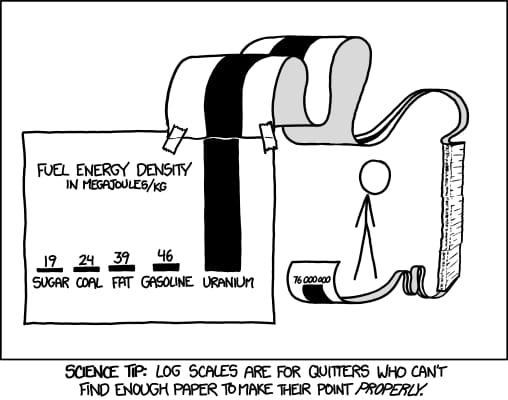
Uranium won because it arrived with an unusually practical mix of advantages: one isotope ready to split, another able to become future fuel, and enough natural abundance to support mining at industrial scale.
Today we’ll look at why uranium became the nuclear fuel of choice in the first place, and why other candidates like thorium never fully caught up.
This is a sponsored feature in collaboration with Cosa Resources (TSX.V: COSA, OTCQB: COSA, FSE: SSKU).
⚛️ Why Uranium Was The First Choice
At the atomic level (stay with me), not every heavy element is equally useful inside a reactor.
What early nuclear scientists needed was something that could sustain a chain reaction in a controlled way: atoms that split when struck by neutrons, release energy, and produce more neutrons so the process keeps going.
Uranium happened to do exactly that.
About 0.7% of natural uranium is uranium-235, a naturally fissile isotope. That means it can split directly when hit by thermal neutrons, which made it usable in the earliest reactor designs.
The remaining 99% is mostly uranium-238, which does not fission easily in conventional reactors, but does something equally important: it can absorb neutrons and transform into plutonium.
That gave uranium a second advantage few fuels could match. It was not just immediate fuel, it was also a feedstock for making more fuel inside the reactor itself.
In other words, uranium arrived with both starter fuel and long-term optionality built into the same metal.
Plutonium often enters the conversation here because yes, plutonium is also highly fissile and extremely effective inside reactors.
But plutonium has one practical limitation: you don’t mine it.
You first have to manufacture it inside a uranium fuel cycle.
That means uranium still sits at the front of the chain.
Thorium also had serious scientific attention early on, and it still does today whenever reactor debates get lively.
Thorium is more abundant than uranium and has attractive fuel properties in certain reactor designs.
But thorium is not fissile on its own. It first has to absorb neutrons and convert into uranium-233 before it becomes usable fuel.
That extra step added complexity just as uranium was already becoming the commercial standard. And once industrial systems lock in, they tend to stay locked in.
Which is exactly what happened.
⛽ The Fuel Path That Scaled
Once light water reactors became the dominant commercial design, the rest of the nuclear industry began standardizing around enriched uranium.
Light water reactors use ordinary water as both coolant and moderator, but that also means they need higher concentrations of uranium-235 than natural uranium provides, around 3% to 5% for standard reactor fuel.
That made enrichment central to the global fuel cycle, not because natural uranium could not work, for example Canada’s CANDU reactors still run on natural uranium, but because the reactor fleet that expanded worldwide was built around enriched uranium.
And once that happened, everything else followed: conversion, enrichment, fuel fabrication, reactor design, licensing, transport, utility procurement, and operator expertise all grew around the fuel for light water reactors.
Thorium still appears regularly in nuclear debates because it is linked to several potential advantages: safety benefits, less waste, and greater natural abundance than uranium.
But paper is one thing. Industrial systems are another.
Thorium is still very far from taking over, not because it is unknown, but because it never built the same infrastructure at scale. There is no mature thorium equivalent today for mining, fuel processing, fuel fabrication, reactor deployment, licensing, and commercial operation across a large global fleet.
Uranium has that system. Thorium does not.

Even most advanced reactors now being discussed still depend on uranium in some form: low enriched uranium, HALEU, or fast reactor pathways that still begin with uranium-based fuel.
Reactor designs have evolved. Fuel chemistry, less so.
So even as reactor designs evolve, one part of the story stays familiar: future nuclear still depends on future uranium. And with the global nuclear buildout accelerating, new uranium discoveries matter more than ever before.
⚛️ Cosa Resources
That brings us to Cosa Resources.

Cosa Resources (TSX.V: COSA, OTCQB: COSAF, FSE: SSKU) is a Canadian uranium exploration company focused on the Athabasca Basin, which is already a strong start. But plenty of explorers operate there, the differentiator is whether the people picking the drill targets actually know what they are looking at.
Cosa’s team is one of the main reasons the story stands out.
Its leadership and advisors are directly connected to some of the basin’s most important discoveries and company successes. Chairman Steve Blower was part of the Hurricane discovery team and previously worked on Denison’s Phoenix and Gryphon deposits. Strategic advisor Craig Parry co-founded NexGen and IsoEnergy. Vice President of Exploration Andy Carmichael was also part of the Hurricane discovery team, and Justin Rodko was a key member of that same technical group.
That is very specific Athabasca pattern recognition, in a basin where a few hundred meters can completely change a result.
The second part of the story is Denison Mines, one of the basin’s best-known uranium developers and a company with real technical weight in the Athabasca.
Cosa has a strategic relationship with Denison, which is its largest shareholder and partner on multiple joint venture projects. The relationship goes well beyond passive ownership. Denison has board representation, technical involvement, and the right to maintain a meaningful ownership stake, while continuing to support the company through both financings and joint venture project funding.
For a junior explorer, it gives Cosa stronger corporate support than many companies at a similar stage, and it also aligns the company with one of the Athabasca Basin’s best-known developers.
Just as important, Cosa is not drilling on fumes. In December 2025 the company raised C$7.5 million through an upsized private placement, with proceeds directed toward uranium exploration. In other words, the next drilling campaigns are funded, which is a pretty useful feature for an exploration company.
And Cosa is drilling.
Its current work is centered on projects beside some serious uranium discoveries. Murphy Lake North sits within about three kilometers of IsoEnergy’s Hurricane deposit, the extremely high-grade discovery made in 2018 by members of Cosa’s own management team.
More recently, March 2026 drilling delivered another encouraging signal: the first hole of the program intersected 5.0 metres of anomalous radioactivity, including readings up to 13,900 cps, within a broader zone of strong structure and alteration on the Cyclone trend. That builds on earlier drilling that had already outlined two kilometers of alteration and graphitic structures along the same trend.

That is exactly the kind of language Athabasca watchers pay attention to: structure, alteration, graphitic conductors, proximity to a major discovery. In geological terms, it is the equivalent of hearing footsteps in the hallway before someone knocks on the door.
Cosa’s Darby project adds another angle. It sits roughly 10 kilometers west of Cameco’s Cigar Lake mine and is described by the company as a mature, discovery-ready project with multiple drill-ready targets, supported by geochemical anomalies, alteration, sandstone structure, and basement faults.
Beyond Murphy Lake North and Darby, Cosa controls a broader Athabasca portfolio that gives it multiple discovery shots rather than one single binary outcome, which is what separates serious exploration platforms from one-project stories.
So the pitch here is not complicated.
Cosa has a team with a real Athabasca discovery record, strategic backing from Denison, funding to keep turning targets into drill campaigns, and active work underway on ground next to some of the basin’s best uranium discoveries.
That does not guarantee success. Nothing in exploration does. But it does mean this is a much more serious setup than the average junior story.
⚛️ Wrapping Up
Nuclear may keep reinventing reactor designs, fuel cycles, and policy language, but one decision from the early atomic era still shapes everything upstream: uranium remains the fuel most of the world still builds around.
That means uranium discovery still matters.
And when discovery happens in a district like Athabasca, especially on trends already proven to host extraordinary grades, even early drilling tends to get watched carefully.
Cosa Resources is drilling exactly in that kind of neighborhood, with a team that has already found what many juniors spend years hoping to find once.
Sometimes nuclear starts with policy.
Sometimes it starts with engineering.
And sometimes it still starts with a drill hole in northern Saskatchewan.
– Fredrik
For more information on Cosa Resources and its Athabasca Basin exploration programs, visit their website https://cosaresources.ca/ or email the company at [email protected].
What did you think of this week's email? |
Disclosure: Nuclear Update (“NU”) is an independent publication focused on uranium, energy, and related markets. Data and information in this article are provided from third-party sources, and NU is not responsible for their accuracy or completeness. Readers should always perform their own research and due diligence on any company or investment discussed. NU does not provide personalized investment advice and is not an investment advisor; any companies or profiles mentioned may not be suitable for all investors. NU received compensation from Cosa Resources Corp for the preparation and dissemination of this sponsored edition.
DISCLAIMER: The content in this article is for informational and educational purposes only and is not financial advice. It should not be interpreted as a recommendation or solicitation to buy or sell any securities. Markets move quickly, opinions can change, and outcomes are uncertain. Always consult a licensed professional before making any investment decisions. NU and its authors are not responsible for any gains or losses arising from the use of this information.
Reply